

WriterLog 1
How to Write and How I Write
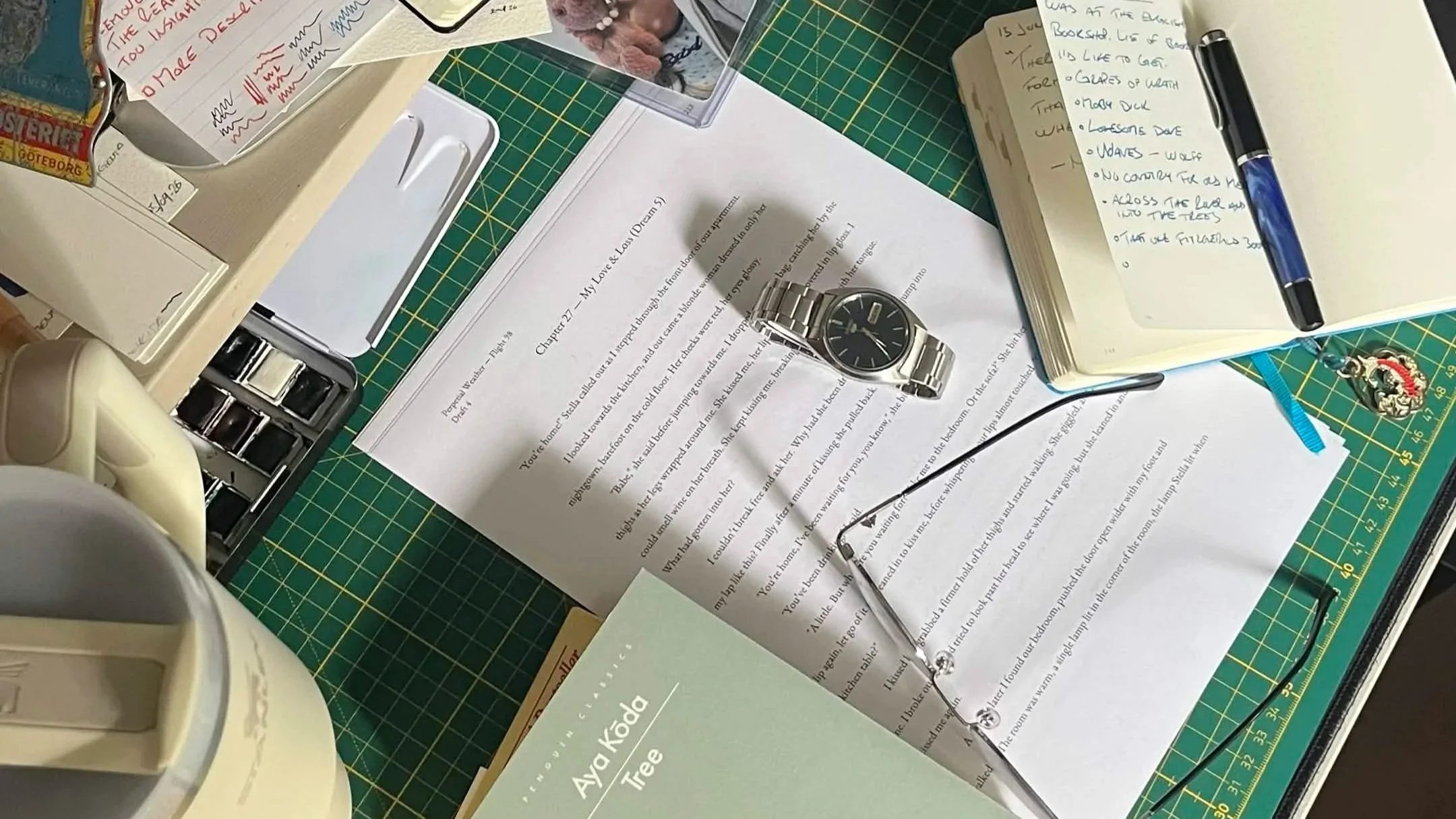
I think that because books are linked to intellectualism, there’s a fog of mysticism hanging over the process of writing. While there is such a thing as the process of writing, it’s a lot easier than most people (everyone except writers I believe) think.
There’s also this belief that only some writers can voice their opinions on how to write; it’s a subjective craft after all. You may think that I, with no NYT bestseller to my name, am allowed to have an opinion on this. And that’s fair. I agree that people can have subjective takes on whether or not to use semicolons, em dashes and Oxford commas, how to structure a story, the build-up, the payoff, how to name characters… and so on and so on… But beyond that, there is an objective, all-encompassing trick to writing.
You just write.
It may sound cliché, and if you’ve read Stephen King’s On Writing, or Murakami’s Novelist as a Vocation, or any other books on writing (there are a lot of them), they all offer either or both of the following tips: just write, and cut the clutter. But really, to write, you just need to do it.
Subjective opinions about ‘how to write’ are not really about how to, but instead about how you can write, if you feel like it. And even those “rules” most big authors tend to break. Tolstoy has the same names for different characters. Anything published before the 70s couldn’t care less about solid structure, which is quite a modern invention (and a bad one at that). High concept, Hemingway, anyone?
So, that’s the introduction to this WriterLog over and done with, and my excuse for writing this, so to speak. I just wanted to write down my current writing process and how I arrived at it, but since I would post this to my website with comments enabled, I knew someone would make a fuss if I didn’t start by defending myself. A so-called premove on chess.com.
So.
How did I get here?
I didn’t know how to write, or how I could write, so I decided to write a lot of short stories to learn, because the quicker you fail the quicker you learn. There’s a saying in Go/Baduk that “if you want to learn Go, lose your first 100 matches as fast as you can.” Which I can’t vouch for because I don’t know how to play Go. But the soul is there.
There’s a sort of drudgery in writing a long novel, getting better along the way, only to want to throw up when you read the first chapter. I also get a sort of existential dread building up when I dislike what I write: why am I even doing it if I’m only going to write something so lackluster and, excuse my language, fucking terrible to look at?
I believe short stories are a good starting point and I’m not sure if I decided that before or after having written a bunch. Could be that it worked for me and that I then came up with the logic behind it. But what’s true is that it allowed me to experiment a lot with style, prose, and structure. Do I want to be more direct or more poetic? Am I over-explaining or under-explaining? Does it evoke any feelings?
It’s also easier to fool people into reading it since it’s only a five-to-fifteen-minute time investment instead of asking them to beta-read an 80,000-word manuscript.
One thing led to another and I wanted to write a novel. I wrote 5000 words and dropped it. Wrote some more short stories. Then I wanted to write another novel so I wrote 30,000 words and then dropped it. Then some more short stories. Then another novel, which I actually finished. Some more short stories. Then another novel. And now I’m sitting on an unknown number of short stories, four somewhat finished novels, and an unknown number of unfinished novels.
How do I write as of October 2026?
I have multiple processes, and which one I pick depends on the project.
My favorite order of business is to come up with a vague idea, decide on a name for the protagonist and a place and a general direction, often without writing it down anywhere, and just keep it in my head. Sometimes I jot something down in my notebook if I believe it will boost inspiration later on. Then I take out a typewriter and start writing.
Typewriters are good because you can’t delete words. You can cross them out and rewrite, but you can’t move around sections or rewrite big chunks. It helps a lot with flow, and I tend to get a lot more written if I can silence the evil little imp sitting on my shoulder, whispering sweet things such as “it’s easier to look at a long-hauler truck’s roadkill than to read your stuff. You should go do something unproductive instead. Why not scroll through Instagram while wrapped in a blanket in bed?”
It also feels horrible to stop in the middle of a page when you’re on a typewriter. Though that might just be more proof of undiagnosed OCD in my case. When you’re using a word processor (as I am now, believe it or not), you can stop whenever you want, you can even st—
But when I’m on a typewriter I tend to stop and stare at the page if nothing wants to come out. I mean, I can’t just stop. After a few minutes I find the words and I power through the rest of the page, but when I get to the end of the page I tend to have a few more sentences or paragraphs that need to be written down. Suddenly I’m at the middle of another page and the tank is empty, then I repeat it.
As for the numbers, for those who care, I tend to write about 1,600 words per day when I use a word processor, and 2,000+ words on a typewriter. It’s more common to write 3,000 words in a day on a typewriter than to write 2,000 words in a day on a word processor. Not that it really matters in the end, but I do find it interesting.
I write a lot on word processors as well, and for that I use Notion (which technically isn’t a word processor). It was amazing up until they absolute shat on their iPad version of the app, so the last two weeks have been hell. However, I shall still glaze it. This is not sponsored even if the following paragraph may sound like it.
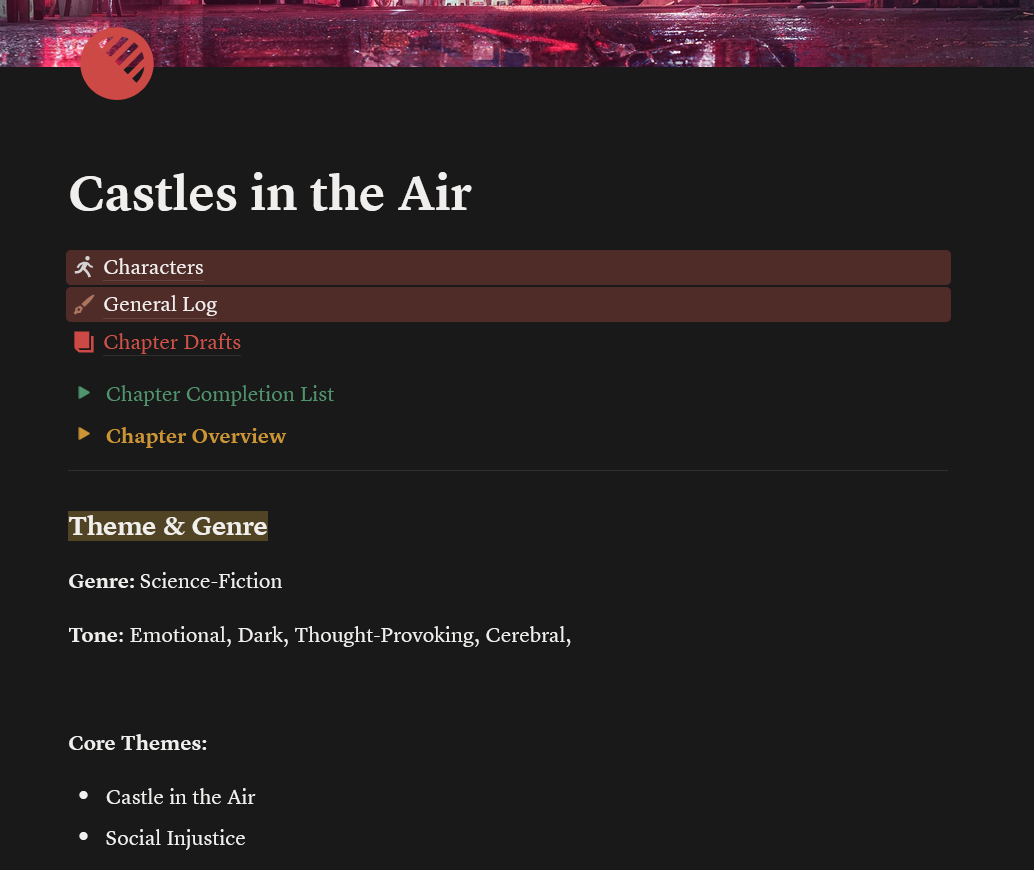
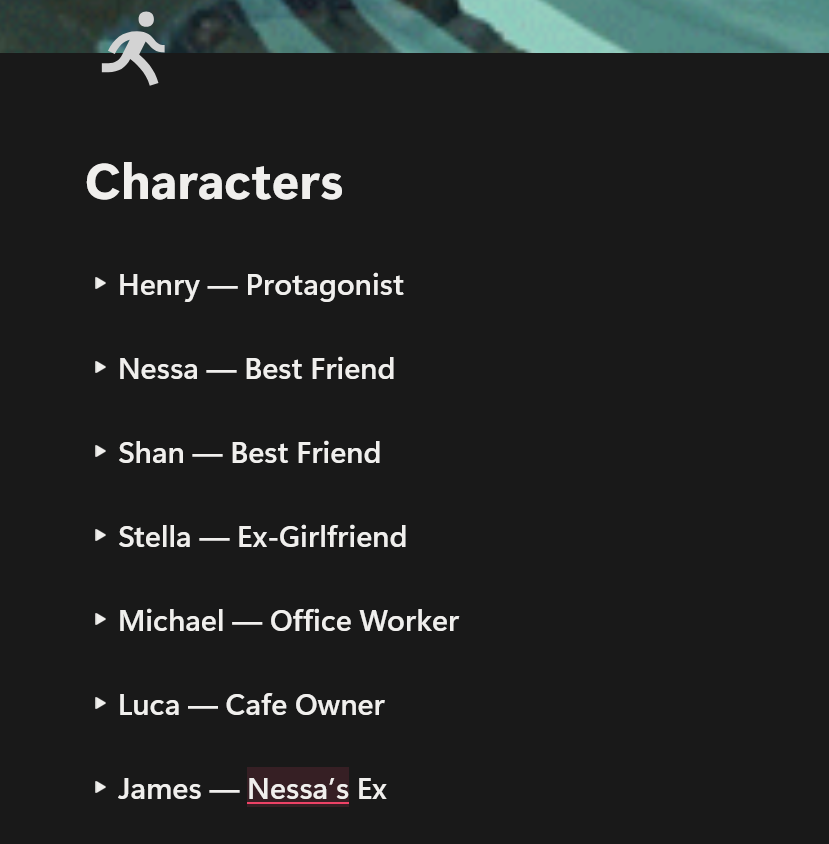
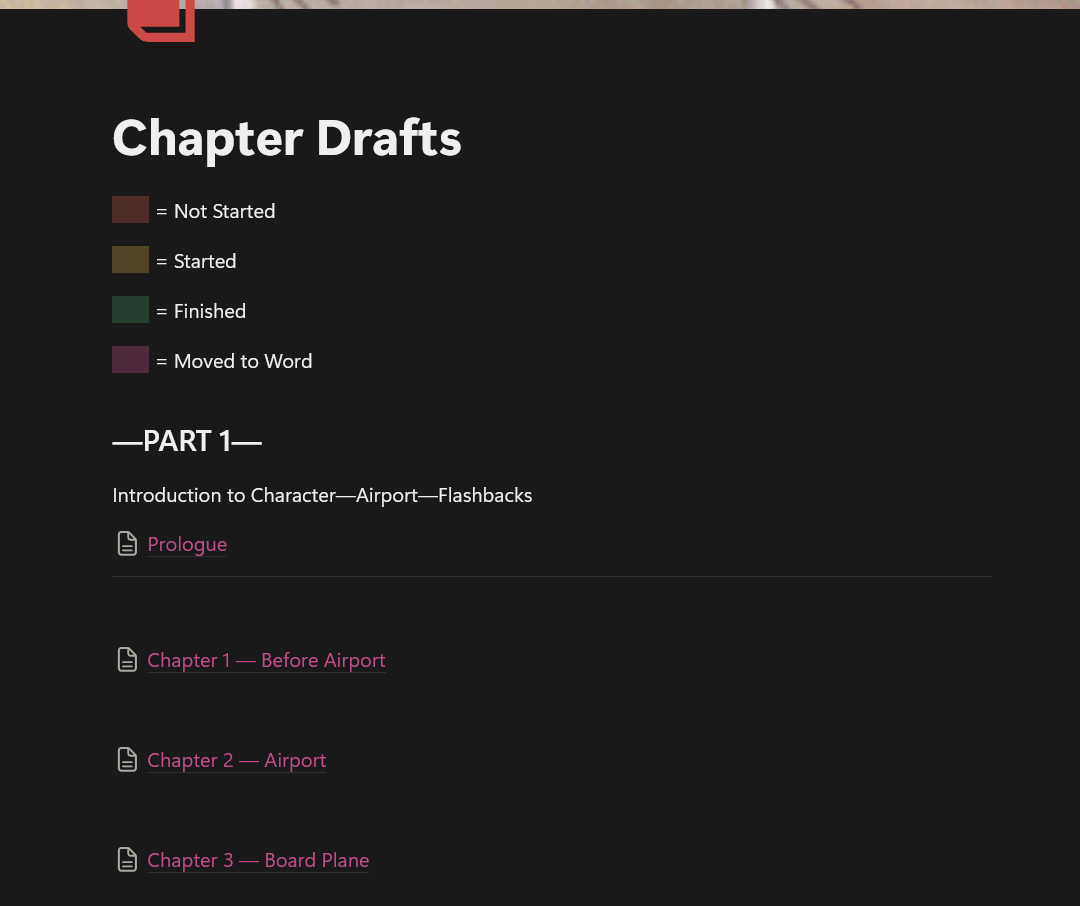
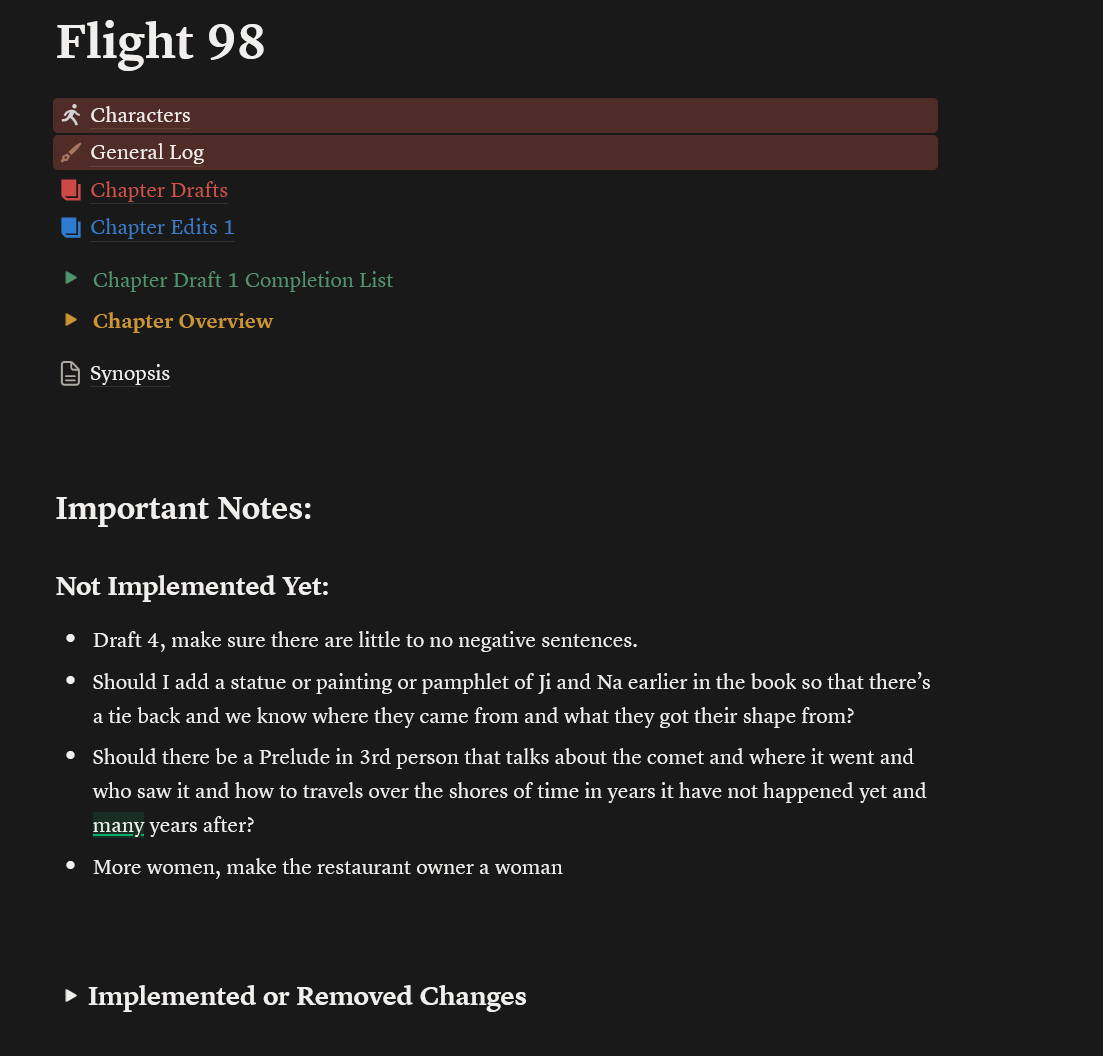
It is good because you can build an entire wiki page for your book and keep everything in one place. Characters, a logbook, locations, magic systems, relationships, plotting, so on and so forth. Pretty good for a hybrid pantser such as myself. I like the process of it, especially being two clicks away from your log book and being able to copy paste things between pages. I’ll make sure to insert some screenshots from project pages.
When I’ve written out the first draft on a typewriter I always put it into a Notion project. In the process of copying it over by hand (don’t use AI or image-to-text conversion) I fix mistakes, put in commas, separate sentences and paragraphs. So when I have it digitized I already have a second draft and can get started on the third.
I tend to make about five drafts before I finish a novel. Short stories tend to be finished by the third draft.
Creative Block and Other Tidbits
Hear me out, just go for a walk without your phone. Not actually not bringing your phone (though I tend to do that sometimes), but put it on silent, or use an app to lock yourself out from using (I use Hank Green’s Focus Friend).
But what if someone calls or texts or there’s some emergency? Well, then that happens. But the risk of an emergency tends to be low (how often does it happen in a week? In a month?). And if someone calls or texts, then let them wait another 40-60 minutes. It’s not a lot of time, and we’re way too easily reached nowadays anyway.
Going for a walk gets the blood flowing, gets you some fresh air, and changes your surroundings without giving you anything specific to focus on. This helps with any kind of creative block, so if you have any other hobbies or jobs, then this would help with that too. I go for walks when I can’t figure out what to do with life, relationships, my own head, music production jobs, painting, and writing.
When it comes to writing, I tend to get a lot of ideas during the latter half of the walk. The first half is just for winding down so don’t think it will magically solve your problems. Your brain works on the problems in the background, and then on your way back home, or when you get home, an idea will spring forth. And even if no idea comes to you, your brain has started working on the problem. Take another walk tomorrow.
Coffee and other stimulants. I’ve personally found that caffeine helps when I need to get stuff done. When I know what I need to write, and how I write it doesn’t matter much, then I can get some caffeine in me and churn out pages. But when I sit down, have a nice, silky-smooth cup of V60 pour-over coffee, and try to figure out where the book should go next, I tend to hit a wall. I have no good explanation of why, but if this seems to be the case for you as well, try drinking something else while you write (tea for me, but also juice, hot chocolate, soda).
Writing with other people around you. It sucks, majorly. Not as in writing in a room with people in it, that’s just impossible for me, but writing when I run the risk of having someone ask me something or try to talk to me. No, even just being able to pick out words in a conversation I’m not part of pulls me right out. But music works, even if there’s vocals. The only problem for me with music would be if I were to vibe too much, which is why it’s difficult for me to listen to TWICE while writing.
TLDR
Everything about what to write, where to write, what to use, and when to write is bullshit. There’s no right way to do any of it, and you should find out what works for you. The only way to find out is to write, and the only way to write is also to write. Find a window of time and start writing, even if you don’t know what to write. Worst case, you just burn it afterwards. Maybe start describing the weather (Hemingway did this a lot). Then write again, and again, and again. Note what makes it easier to write and lean into that. Is a typewriter easier? Writing in the middle of the night? At a cafe? While listening to music? Always starting a writing session by describing the weather? Running Sonic-style on lots of coffee?
You can read books or articles (such as this one) and feel as if you’ve made some progress, but I think it’s mostly false. The only progress you can make is finding out what you like.
That’s the biggest thing I’ve learned from writing, I believe. There’s no objective truth about how to write beyond the fact that you have to write. That’s all there is to it. And to write, you need to enjoy the process of writing, because that’s all there is to it. If you don’t enjoy some part of the process, whether it’s sitting down and having words flow out or sitting down and slamming your head against the table and calling yourself useless, then writing likely isn’t for you. But if you get excited thinking about the ups and downs I’m describing, and you can feel your heart beating when thinking about it, then writing is definitely for you, as it is for me.
“It’s hell writing and it’s hell not writing. The only tolerable state is having just written.”
— Robert Haas
(It’s a good quote, but fundamentally I enjoy the active process of writing really quite a lot).
— Elliot
